Elon Musk’s Unretiring Mindset and the Puerto Rico Solar Gamble: The Untold Story Behind the Billionaire’s Most Controversial Mission
When most billionaires talk about retirement, it’s in the language of yachts, private islands, and endless leisure. But for Elon Musk, the world’s most unpredictable tech mogul, the very idea is anathema. “A waste of time,” he once called it—an odd statement from a man whose every waking hour seems to be spent chasing the impossible.
Yet it’s that very refusal to slow down that led Musk into one of the most controversial chapters of his career: a high-stakes gamble to bring solar power to hurricane-ravaged Puerto Rico. What really happened on the island? Why did Musk’s bold promises ignite both hope and skepticism? And what does it reveal about the billionaire’s vision for the future—and the limits of his ambition?
“Retirement Is Not an Option”
It’s 2019, and Elon Musk is being interviewed on stage at a tech conference. The moderator asks about his retirement plans. Musk laughs, shakes his head, and leans forward. “Why would I want to sit on a beach for the rest of my life?” he says. “That sounds like torture. I’d rather die doing something meaningful.”
For Musk, work isn’t just a job—it’s an existential mission. Whether he’s launching reusable rockets with SpaceX, pushing the boundaries of electric vehicles at Tesla, or warning about the dangers of artificial intelligence, Musk frames his efforts as a “lifetime project” to secure humanity’s future. He’s not just building companies; he’s building legacies.
But sometimes, the line between vision and vanity blurs. Nowhere was this more apparent than in the aftermath of Hurricane Maria, when Musk’s ambition collided with the harsh realities of disaster recovery.
The Puerto Rico Solar Gamble
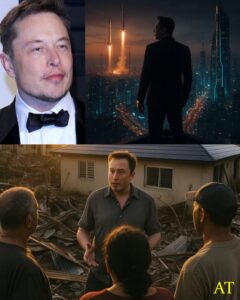
In September 2017, Hurricane Maria devastated Puerto Rico, leaving millions without power for months. The world watched in horror as residents struggled to survive in the darkness. Amid the chaos, Musk made headlines with a single tweet: “The Tesla team could help rebuild Puerto Rico’s power grid with solar & battery systems. Tesla has done this for smaller islands. Need is real.”
The tweet went viral. Puerto Rico’s governor, Ricardo Rosselló, responded immediately. Within weeks, Musk’s engineers were on the ground, installing solar panels and Tesla Powerwalls at hospitals, schools, and even a children’s shelter. The media hailed Musk as a savior, a tech messiah delivering hope where governments had failed.

But behind the scenes, the story was far more complicated.
The Reality Check
Despite the fanfare, only a handful of solar systems were actually installed. Critics accused Musk of using Puerto Rico as a PR stunt, pointing out that the vast majority of the island remained reliant on its battered, fossil-fuel-dependent grid. Local energy experts questioned whether Tesla’s technology, designed for affluent homeowners in California, was scalable—or even appropriate—for the unique challenges of Puerto Rico.
“There’s a big difference between powering a single hospital and rebuilding an entire grid,” said Dr. Ana Morales, an energy policy analyst at the University of Puerto Rico. “We needed systemic solutions, not just showpieces.”
Musk, for his part, insisted that the project was a proof of concept—a demonstration of what solar energy could achieve in the face of disaster. But as the months passed and the headlines faded, many Puerto Ricans felt forgotten, left in the shadows once again.
The Backlash and the Believers
The backlash was swift. Some residents accused Musk of overpromising and underdelivering. Others wondered why a billionaire from California was getting more attention than local engineers who had been working around the clock to restore power.
Yet for some, Musk’s intervention was a lifeline. At the Hospital del Niño, Tesla’s solar array kept life-saving equipment running when the main grid failed. “He gave us hope when we had none,” said Maria Torres, the hospital’s director. “Even if it was just a few buildings, it made a difference.”
The polarized response exposed a deeper truth about Musk’s approach: his projects are as much about spectacle as substance. He thrives on audacious bets, but the outcomes are often uneven—transformative for some, disappointing for others.
The Bigger Picture: Musk’s Global Gamble
Why did Musk risk his reputation on such a high-profile, high-risk intervention? Insiders say it was about more than just Puerto Rico—it was about proving a point to the world.
“Musk believes that renewable energy isn’t just a luxury for the rich,” said a former Tesla executive who spoke on condition of anonymity. “He wants to show that it’s the answer to our biggest crises—climate change, disasters, even war. Puerto Rico was his test case.”

But the test revealed the limits of even Musk’s resources. Solar and battery technology, while promising, still face major hurdles: cost, scalability, and the inertia of entrenched utilities. And while Musk’s vision is seductive, it’s not always grounded in the messy realities on the ground.
The Unretiring Mindset: Blessing or Curse?
For Musk, the Puerto Rico episode was a lesson in humility—but it didn’t slow him down. In the years since, he’s doubled down on his refusal to retire, launching new ventures in AI, tunneling, and even brain-computer interfaces. He remains convinced that his work is a “global obligation,” a personal responsibility to push humanity forward.
But critics warn that Musk’s relentless drive can be a double-edged sword. “He’s a visionary, no doubt,” said Dr. Morales. “But sometimes visionaries need to listen more and promise less.”
The Legacy Question
As Musk barrels toward the future, the question remains: will his lifetime project leave a legacy of lasting change, or just a trail of headlines and half-finished dreams? In Puerto Rico, the answer is still unfolding.
For every child whose life was saved by a Tesla-powered hospital, there are thousands still waiting for reliable electricity. For every bold promise, there are lessons to be learned about the limits of technology—and the importance of humility.
But one thing is certain: Elon Musk isn’t retiring anytime soon. And as long as he’s working, the world will be watching—hoping that his next gamble pays off, and that his unretiring mindset can help light the way out of the darkness.
In a world hungry for heroes, Musk’s story is a reminder that true progress is never simple. It’s messy, controversial, and often incomplete. But for better or worse, it’s driven by those who refuse to sit still—even when the world begs them to take a break.**